
Founder guide
Best tools to start a coffee brand
The real categories of tooling for a coffee roast brand: contract and private-label roasters, green bean importers paired with your own roasting, packaging and valve suppliers, store builders with separate sourcing, and Dough. What each covers and where it stops.
Direct answer
A coffee brand is assembled from a green bean source, a roasting route, packaging that manages degassing, and a sales channel. The choice is between a private-label roaster that ships finished bags under your brand, a contract roaster running your profile, importers plus your own roasting, a store builder plus separate sourcing, or Dough, which takes a described roast to a designed bag, a priced storefront, and a manufacturing path in one account.
At a glance
| Decision | Dough | Assembled stack: roaster, packaging supplier, store builder |
|---|---|---|
| What you need before you start | A written description of the coffee you want to sell | A green coffee source, an agreed roast profile, and print-ready bag artwork |
| Product and brand design | Drafts with design, packaging concept, and brand, refined in plain language | Separate briefs to a designer and a packaging supplier, reconciled by you |
| Unit economics | Unit cost and remaining margin shown behind the price you publish | A spreadsheet fed by a green price that moves with the market |
| Testing demand before inventory | Waitlist or pre-orders held in escrow, refunded if the threshold is not met | Assembled from apps once a store and roasted inventory both exist |
| Manufacturing | Sampling, production with vetted manufacturers, and fulfillment in one account | Sourced, negotiated, and coordinated by you across separate vendors |
| Cupping, profile approval, and certification | Yours, with your roaster | Yours, with your roaster |
| Ownership | You own the business fully and Dough takes no equity | Set by each contract and platform agreement you sign |
| Cost to begin | One plan at $29 per month plus a share of what you sell, no setup fee | Platform fees, design, bag minimums, and green coffee committed before revenue |
The five categories you are choosing between
Coffee searches return roasters, importers, packaging suppliers, commerce software, and platforms, presented as if they compete. They do not. Each covers a different part of the work, and sorting them by which part is the first useful move.
The job has five parts. Choosing the green coffee and the roast profile that make the product worth buying. Getting it roasted. Getting it into packaging that handles degassing and preserves freshness. Knowing the cost per bag and setting a price against it. Getting a stranger to buy it, ideally more than once. A tool earns its price in proportion to how many of those it carries.
- Private-label roasters: they ship finished, branded bags
- Contract roasters: they roast your chosen green to your profile
- Green coffee importers plus your own roasting: you control everything and do everything
- Store builders plus separate sourcing: they sell coffee that already exists
- Dough: product concept, bag and brand, priced storefront, and manufacturing in one account
Private-label and contract roasters
A private-label roaster sells you their coffee in your bag. Roast profiles are already developed, packaging is often available as a stocked option, and some will drop-ship individual orders, which removes inventory from the equation entirely. It is the fastest route from idea to a sellable bag, and the reason it exists is that roasting well is a craft that takes years.
A contract roaster is a step further along the control axis. You choose the green coffee, agree a profile, and they roast to it. This is where a brand built on a specific origin or a specific cup character has to operate, because the product is genuinely yours. It also assumes you can evaluate a roast, which means cupping, which means either your own trained palate or someone you pay for theirs.
Both categories quote in pounds or kilos and have minimums. Ask about roast-to-order versus roasting to stock, because that single answer determines whether your customer receives coffee roasted days ago or weeks ago, and freshness is most of what a specialty customer is paying for.
- Ask whether they roast to order or roast to stock, and what the typical age at dispatch is
- Ask for the minimum per roast, the lead time, and the reorder minimum separately
- Ask whether they bag, label, and ship, or hand you bulk coffee to pack yourself
- Ask for cupping notes and a sample roast before committing to a profile
Green importers and roasting yourself
Green coffee importers sell by the bag and increasingly in smaller quantities, with origin, process, varietal, harvest year, and cupping scores documented. Buying green and roasting yourself gives complete control over the product and the best margin structure in the category, and it is how most specialty roasters started.
The costs are equipment, time, and skill. A production roaster is a serious capital purchase with installation and ventilation requirements, and local rules on emissions and afterburners are a real constraint in many places. Roasting consistently is a learned skill that takes repetitions to acquire, and inconsistency between batches is what a subscription customer notices first. Green coffee is also an agricultural commodity with a harvest calendar and a moving market price, so a coffee you built a brand around can simply become unavailable.
Packaging, freshness, and the label
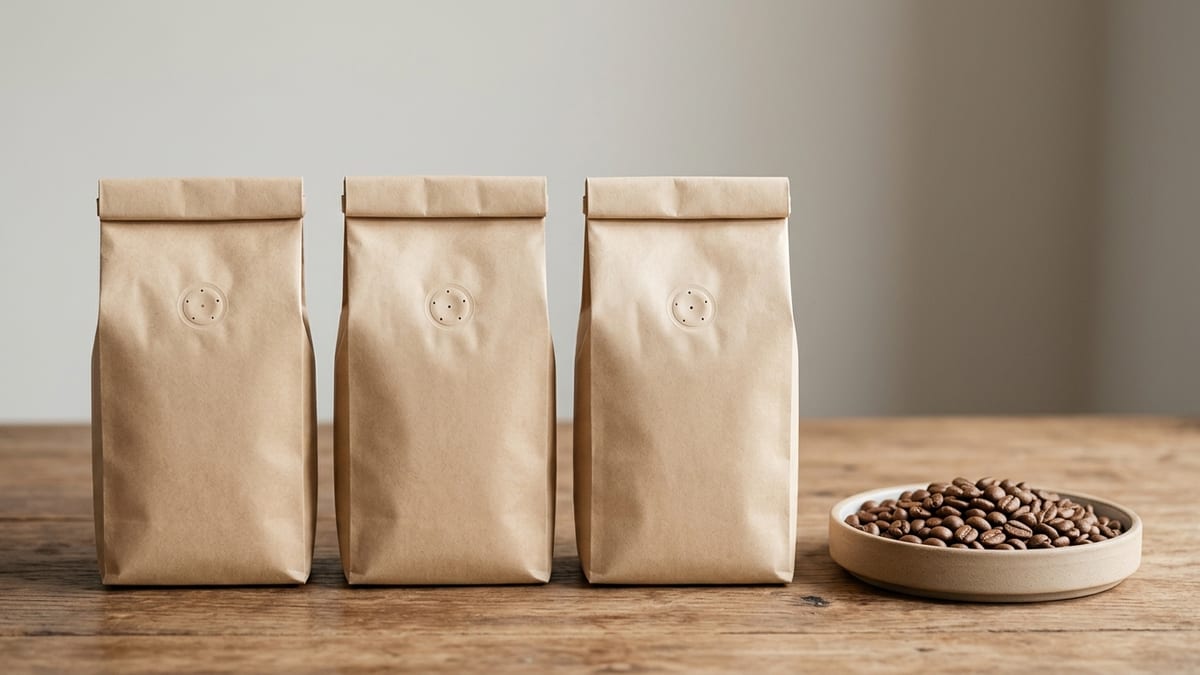
Coffee packaging is a functional component rather than a wrapper. Freshly roasted coffee releases carbon dioxide for days, which is why bags carry a one-way degassing valve: without one, a sealed bag can swell or burst, and packing too early causes both. Barrier properties, seal quality, and whether the bag is flushed with nitrogen all change how long the coffee stays good.
The roast date is the single most useful thing on a specialty coffee bag and it is a decision rather than a requirement. Printing a roast date is a freshness claim that invites comparison; printing only a best-by date is permitted and tells the customer less. Choose deliberately, and make sure whichever you choose is applied reliably at the point of packing.
Standard packaged food labeling applies: statement of identity, net quantity of contents, ingredient statement, and the name and place of business of the responsible party. Plain roasted coffee contains insignificant amounts of most required nutrients, which affects how nutrition labeling is handled, so confirm the current requirement rather than copying another bag. Certifications such as organic carry their own certification requirements and cannot be claimed without them, and origin and process claims should be traceable to the importer documentation you were given.
- A degassing valve is functional, not decorative, and packing too early defeats it
- Roast date versus best-by date is a positioning decision with real consequences
- Organic and fair trade style claims require actual certification, not intent
- Grind options multiply your SKU count faster than founders expect
Store builders and the subscription question
Coffee is a consumable with genuine repeat demand, so subscription capability matters more here than in almost any other category. General ecommerce platforms handle recurring billing, shipping rates, and email well, and that is a real part of what a coffee brand needs.
What they assume is the product. The store is empty until green coffee, a roasting route, bags, and inventory all exist somewhere. Costing lives in a spreadsheet and the price is typed by hand, which is how a published price drifts away from a green coffee cost that moves with the market. There is also a category-specific gap: nothing in a store builder knows the roast date of what is in the box, so freshness, which is the actual product promise, is managed entirely outside the system that takes the money.
What Dough covers across the whole path
Dough begins where the coffee is still a sentence. You describe the roast character, the origin story you want, and who drinks it, and it returns several drafts, each with a product design, a packaging concept, and a brand. Drafts are refined in plain language and nothing commits until you choose one. They come in two shapes: a catalog product a manufacturer in the network already makes, which is faster and cheaper, and a custom product that needs real development work.
Building the draft publishes a storefront on its own address. You set the price and Dough shows the unit cost and remaining margin before you commit, so cost and price are not maintained separately. The storefront can collect waitlist signups or pre-orders before any roast is committed, with funds held in escrow and refunded if the launch threshold is not met. Sampling, production with vetted manufacturers, and fulfillment follow in the same account, with ads and analytics alongside.
Design and brand lock when the product is built, so refinement happens on drafts rather than after. You own the business fully and Dough takes no equity. Pricing is one plan at $29 per month plus a share of what you sell, with no setup fee. Because Dough runs a public MCP server, the same workflow can be driven from a chat client.
What Dough does not do for you: cupping and profile approval, certification, and the freshness discipline of roast-to-dispatch timing. Those stay with you and your roaster.
How to choose in one week
Run one test rather than reading more comparisons. Take your actual coffee idea and push it through each candidate stack until you reach two things: a number you would put on a price tag, and a page a stranger could buy from. Note every point where you retyped something by hand or invented a figure you did not have.
Those points are the real cost of the stack. An importer gets you green coffee and stops. A store builder gets you a subscription checkout with nothing in it. A private-label roaster gets you a bag that is not distinctively yours. Compare the categories on how far each carried the idea before handing the problem back.
For the sourcing and roasting sequence itself, see the companion guide on how to start a coffee roast brand, linked below.